
Nature guide
The trees that shape the safari
When you picture an African safari, you probably imagine a flat topped acacia standing alone on the plains. Trees are a big part of the landscape, and they give food, shade and shelter to many animals.
Learning a few of them will help you understand where to look for wildlife. Leopards rest in their branches, elephants feed on their bark and giraffes browse their leaves.
Trees to know
Seven trees you will see on safari
Baobab
The giant of the bush, with a huge swollen trunk that stores water. Some baobabs are many hundreds of years old. Tarangire National Park is famous for them.
Umbrella thorn acacia
The classic flat topped tree of the Serengeti. Giraffes reach its leaves with their long tongues, despite the sharp thorns.
Whistling thorn
A small acacia with round swellings on its branches where ants live. When the wind blows through holes in them, the tree makes a soft whistling sound. The ants also protect the tree by biting animals that try to eat it.
Yellow fever tree
A tall acacia with yellow green bark that grows near water. The Lerai Forest in the Ngorongoro Crater is made up of these beautiful trees.
Sausage tree
Easy to spot by its long, heavy fruits that hang like giant sausages. Leopards often rest in its wide branches.
Candelabra tree
A tall euphorbia that looks like a giant cactus or candle holder. Its milky sap is poisonous, so animals leave it alone.
Fig trees
Large fig trees grow along rivers and give shade and fruit to monkeys, baboons and birds.
Trees and wildlife
Where trees and animals meet
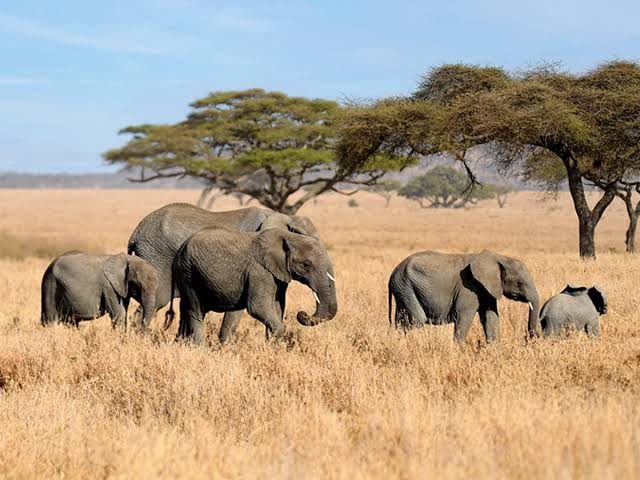
In the dry season, elephants strip bark from baobabs and acacias to reach moisture and food. In Lake Manyara, lions are known for climbing into trees to rest, and in the central Serengeti leopards drag their prey into the branches to keep it safe from hyenas.
Ask your guide to stop at large trees along rivers. They are some of the best places to find leopards and birds.
Questions
Tree questions
Where can I see the biggest baobabs?
Why are many acacias flat on top?
Do lions really climb trees?
Are acacias still called acacias?
Plan your safari with Hadada
Speak to our team for a tailor-made itinerary across Tanzania.